spring semester recap
My last final for the spring semester was yesterday, officially wrapping up my junior year at MIT! I'm really happy to say that this has been the best semester I've had here so far, and I attribute that to several things: 1) having figured myself out more, 2) spending more time with friends, and 3) investing more time into my hobbies. I had a lot of fun experiences and learned a lot through them, so I wanted to share them on this little blog!
gap semester
I think that my gap semester in the fall really set the tone for my spring semester. For some context, I decided to take a leave of absence for one semester because I felt that I would learn more about software engineering and AI by working in the industry. To best sum it up, about a couple weeks into my internship, I realized that I wasn't learning much from my work. What I appreciated about the internship was that the code I wrote would actually go live, and it was cool to collect user feedback through A/B testing and behavioral analytics to iterate on the design. However, I wasn't becoming stronger technically, as the features I was working on weren't particularly challenging. I also felt that I wasn't contributing much of my own input. Although technical implementation and architecture were up to me, the features themselves — down to each Figma component and endpoint — had already been pre-designed and approved by various PMs. This was largely because when you're working on user-facing features at such a big company, everything needs to be standardized and vetted, meaning less room for experimentation.
That's not to say that the gap semester wasn't valuable! There is certainly something to be said about learning from any experience, regardless of how you felt about it in the moment. When my friends ask me about how my gap semester went, I tell them I was really glad I did it because it helped me gain more clarity about what types of environments I enjoy working in and what aspects of work I want to prioritize in the future. The additional time I had outside of work (time I wouldn't have had if I were in school) was also incredibly meaningful, as I finally reignited my hobbies of reading and writing.
The gap semester was a reflective experience more than anything, and my main conclusion was that what I'm working on matters much more to me than it did previously. Moving forward, I want to actively look for opportunities where:
- I am learning a lot technically and personally through the work
- It will open doors for me (e.g. into different types of companies/positions/areas of CS that I can dive deeper into in the future)
- I am surrounded by people I enjoy working with and who make me a better person
All that's to say that after the gap semester, I really wanted to reprioritize learning. That made me really excited about going back to school, because I think that school is good for building a strong foundation and reinforcing first principles. I want to get better at problem-solving, and school helps with that by building mental models you can either build on or map onto different problems. It's quite common nowadays to hear that "school is useless, when am I ever going to need to know xyz", and especially with AI, people are now questioning if they even need to learn how to code. While it's true that you won't use all the knowledge you have been exposed to, I believe that it's never been about the concrete thing itself. Rather, it's about building those frameworks that ultimately help you reason about things you don't understand later down the line. For example, people who get good at math are able to pick up programming more easily because math teaches you the logical frameworks to think in abstractions, which is a core part of writing code.
spring semester!
In the spirit of prioritizing my learning, I decided to take a step back from clubs and hackathons. As a result, I got so much more out of my classes, in that I was cramming a lot less for exams and actually absorbing the content through practice and spaced repetition. I still struggled a LOT—I was no stranger to abysmal scores, sometimes after walking in convinced I'd ace the test (6.1220 never fails at failing me). But I've started to re-exercise the skill of breaking down new problems, something I didn't fully use during my last internship.
I was also able to spend a lot more time with my friends this semester! This had so much more of an impact on me than I thought it would. For my first two years here, I admittedly didn't reach out to my friends as much as I should have, and instead buried myself in clubs, hackathons, and PSETs. With all of that filling my time, it was easy to put off my friends, and it's only looking back now that I think, how did I not catch myself sooner? This semester I finally made the time, and it made me so much happier. Not only that, but I truly appreciate my friends at MIT so much more than I had before. They say that MIT is a special place because of the people, and I think for me it took a semester away to realize what I had been overlooking this whole time.
Other than being a much-needed relief from school, hanging out with my friends always exposes me to something new and leads me out of my comfort zone. I tried, failed, and mildly succeeded at things like rock climbing, Mahjong, crochet, film development, and polymer clay. I also explored Boston more than I ever had before, spending time in pretty much all the major areas (North End, Chinatown, the waterfront, Beacon Hill, the MFA, Allston, Haymarket, and Back Bay)! Overall, I learned to say yes to more things.
A couple highlights:
-
Going to YC Demo Day with KZ and SZ! One of the partners that we knew from the IAP program got us in as investors (cue our investor badges), so at some point we were talking to companies and cosplaying investors. It was really funny to see how people immediately relaxed and stopped trying to pitch us when we told them we weren't actually investors. More thoughts on YC later.
-
Hosting an end-of-semester potluck with KW! I have very little faith in my baking abilities, so when K said he wanted to make Macchu Peachu (inspired by a recent trip to Peru), I was pretty pessimistic. I had every right to be, as our first attempt resulted in a pot load of raw flour and mush from the peaches. But just as the potluck entered full swing, our second attempt came out of the oven, and let's just say people really enjoyed it! I wasn't expecting many people because MIT students can be quite busy, or hosed as we like to say (a nod to drinking from the firehose), but to see everyone take the time to cook something and share what they made made me so, so happy.
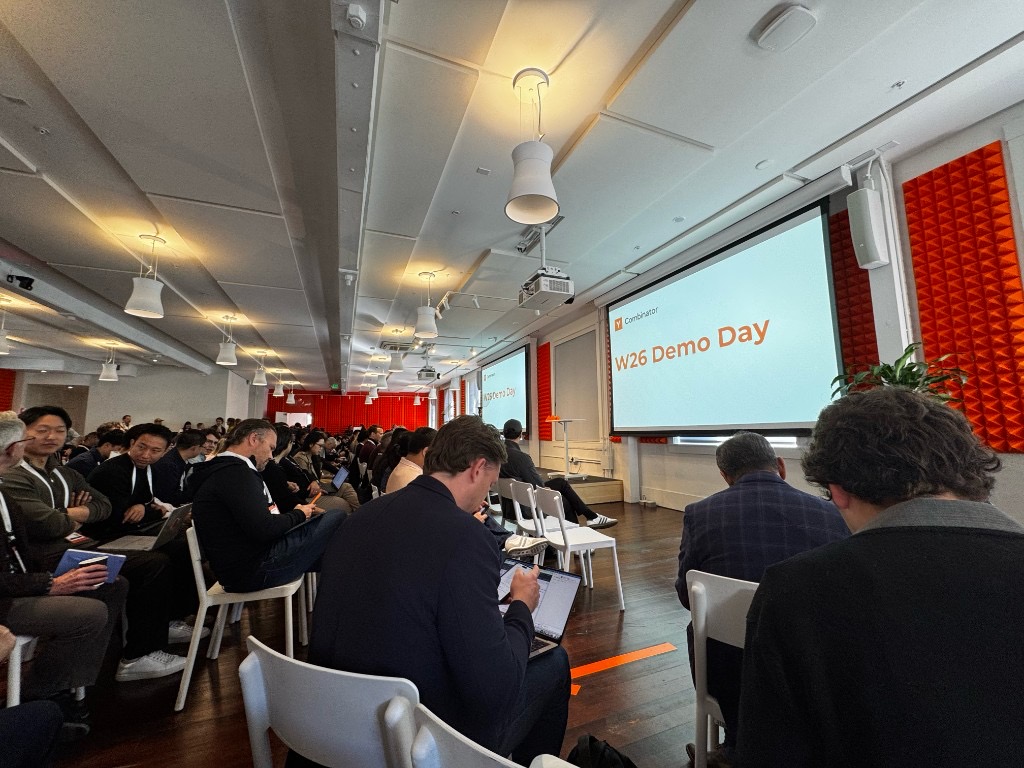
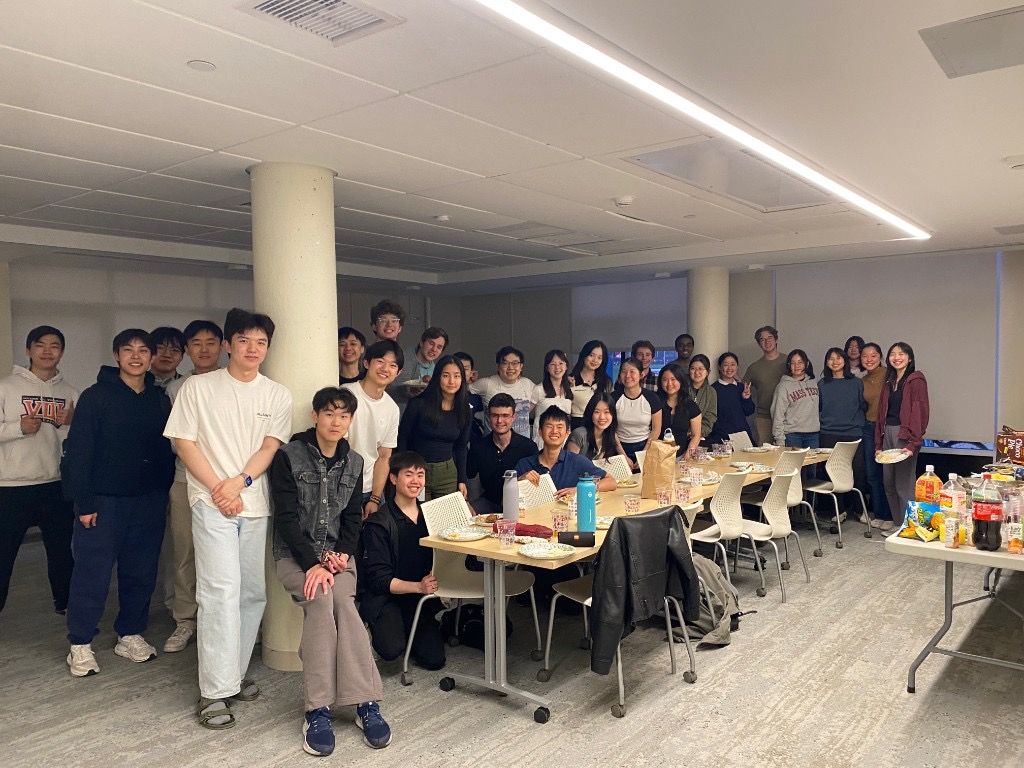
highlights from this semester!
other things I have been thinking about
After doing the YC IAP Program (more about that in my previous blog post), my friends and I have been seriously considering graduating early to do YC.
Initially, this felt like the right path for me. I wanted to do YC because I wanted to build a startup. It naturally aligns with the kind of work I want to do and the environment I want to be in: building something that could solve meaningful problems, working alongside my closest friends, and doing something hard but rewarding. I value making an impact, autonomy, and personal growth, and a startup felt like the place to find all three. YC would give us the funding, network, and mentorship to actually build one.
However, over the past few months, my perspective has changed quite drastically. This is for two main reasons:
1. building for the sake of building
One concern I've raised is that if I am going to pour all of my time and energy into building this startup, I want the idea to be something worth building. To be frank, I'm still trying to figure out what is worth building, but I can generally pinpoint what I don't want to work on. After conversing with previous YC founders, I've heard the same thing back — that once you're in the batch, there is a lot of pressure to grow and then raise. This often leads to the side effect of doing whatever it takes to drive revenue numbers up, and what makes quick money isn't always something I'd be proud of building. More broadly, YC leans heavily toward B2B SaaS, since it's often the fastest path to early revenue — and while there are exceptions, it's not the space I'm most excited to build in.
I resonate a lot with the ideas in this blog post, written by CJ, an MIT alum, where he explains that you don't have to be a founder to make an impact. One key takeaway I had was that the people who maintain, improve, and sustain existing systems are often just as important, and sometimes even more impactful. As CJ puts it, design can only go so far: good maintainers can make up for bad design, but good design can never make up for a lack of maintainers. We put far too much emphasis on the few founders rather than the people who, albeit less visible, consistently care for the community, allowing it to thrive.
The other key takeaway I had was that creating something new is not automatically valuable just because it's new. CJ points out that innovation is often treated as the highest achievement; this has been the case in science fairs, startups, and popular narratives about technology. He gives examples of startup ideas that seemed to reinvent things that already existed and suggests that some people become founders because being a founder is prestigious (I am guilty of this), not because a new solution is actually needed.
2. learning to build vs. learning to sell
Going back to my thoughts on prioritizing a high rate of learning, I am now unsure of whether doing YC will provide that for me. After chatting with current and previous batch members, even those whom YC worked well for, the advice I've been receiving is that YC is good for learning how to build a business, but not necessarily good for becoming a better engineer. Especially in the early stages of building a company, the work leans heavily towards sales and outreach while technical work is more focused on building an MVP. That often means writing quick, throwaway code rather than thoughtful, sustainable engineering. Knowing how to build a business is valuable, and I do want to learn at some point. For now, though, I want to prioritize technical skills because when you're young, it's easier to get mentorship, and people are more willing to tolerate your engineering mistakes. In my experience, technical work also requires deeper thinking and problem solving — skills that benefit from an early start and years of honing.
final thoughts
Those reasons, combined with the fact that there are still so many things I want to do at MIT — help organize a retreat, take cool classes like How to Make Almost Anything, run a writing club with my friends, meet more people I'd want to work with in the future — make me contemplate whether I should stay in school for longer.
Another path I'm considering is graduating in the fall to start work in the spring, but this is contingent on me getting a job where the opportunity for growth outweighs the benefits of staying in school. Another option is to stay in school but work at a company part-time or over IAP. Lastly, another option I'm considering post-graduation that isn't joining the workforce is doing an MEng (Master of Engineering). I've been working across a lot of broad areas, which is good as an undergrad for building a baseline, but I'm starting to think about how I can specialize (systems, HCI and UI/UX, architecture, data engineering, etc.) as I am going to graduate soon.
I still don't have it all figured out, and I might even disagree with the thoughts I've written here later on. But that's okay! This semester taught me more about what I want than any clear answer could have. So for now, I'm keeping my options open.